"English? Yes, but make it Korean": A Fun Guide to "Konglish
Apr 03, 2026
Imagine you are a native English speaker living in Seoul. A Korean friend looks at you before a big test and cheerfully shouts, "Fighting!" Your immediate reaction might be, "Wait, why do we need to fight?" Don't panic. They aren't trying to start a boxing match. They are encouraging you. This is the wonderful, sometimes confusing world of "Konglish" (콩글리시). Konglish refers to English words that have been adopted into the Korean language, often with completely different meanings or pronunciations. For English speakers, it’s a fun bridge between the two languages—but only if you know the real meaning! Let’s explore four must-know Konglish terms that will help you blend right in.
1. "Fighting!" (파이팅) – The Ultimate Word of Encouragement Forget about aggression. In Korea, "Fighting!" (or Hwaiting!) is a massive morale booster. It is derived from the sports concept of a team fighting for victory.
-
Konglish Meaning: "Go, Go!", "You can do it!", "Good luck!", "Cheer up!"
-
When to use it: Before an exam, a job interview, or when a friend is going through a tough time. It’s the single most common word of encouragement you will hear.

2. "Skinship" (스킨십) – The Art of Bonding This word blends "Skin" and "Relationship." You won't find it in a native English dictionary, but in Korea, it is used everywhere, from news articles to casual conversation.
-
Konglish Meaning: Physical intimacy and affectionate touching.
-
Context: It’s not just for romantic couples. It applies to friends holding hands, family members hugging, or a gentle pat on the back. For Koreans, skinship is a warm expression of Jeong (affection) and closeness. Understanding this word is essential for grasping the relationships in your favorite K-Dramas!
3. "Eye-shopping" (아이쇼핑) – Just Looking, Thanks! Native English speakers would call this "Window shopping." Koreans have made it simpler and more literal. After all, what are you using to shop? Your eyes!
-
Konglish Meaning: Looking at goods without intending to buy them.
-
Context: You can use this word anywhere from a traditional market (Sijang) to a fancy department store. It’s a perfectly normal activity for friends hanging out on the weekend.
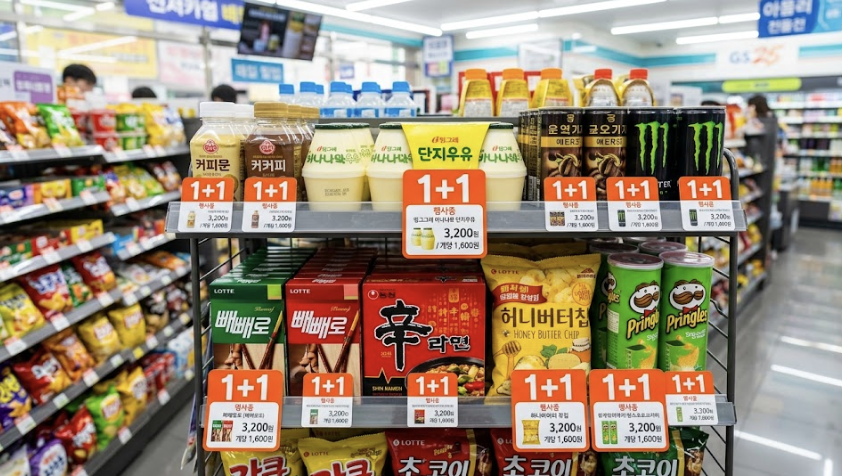
4. "One-plus-one" (원플러스원) – The Magic of BOGO If you see this sign in a Korean convenience store or a cosmetics shop (like Olive Young), get your wallet ready. In English-speaking countries, this is often called BOGO (Buy One Get One free).
-
Konglish Meaning: Buy one, get one free.
-
Tip for Learners: This is one of the most practical Konglish words you will use. Look for the "1+1" (often stylized in large numbers) on everything from drinks to facial masks. It’s the ultimate Korean value!
Konglish isn't "broken" English; it’s a creative evolution of foreign words into Korean culture. While these words are rooted in English, using them correctly requires a deep understanding of the Korean context. The next time you hear a familiar-sounding word, take a moment to observe how it’s used. You might just discover that you already know more Korean than you thought. So, don't just "eye-shop" these words-try using them. Aja Aja Fighting!
Author