
More Than Friends, Less Than Lovers: Understanding the Korean "Sseom"
May 08, 2026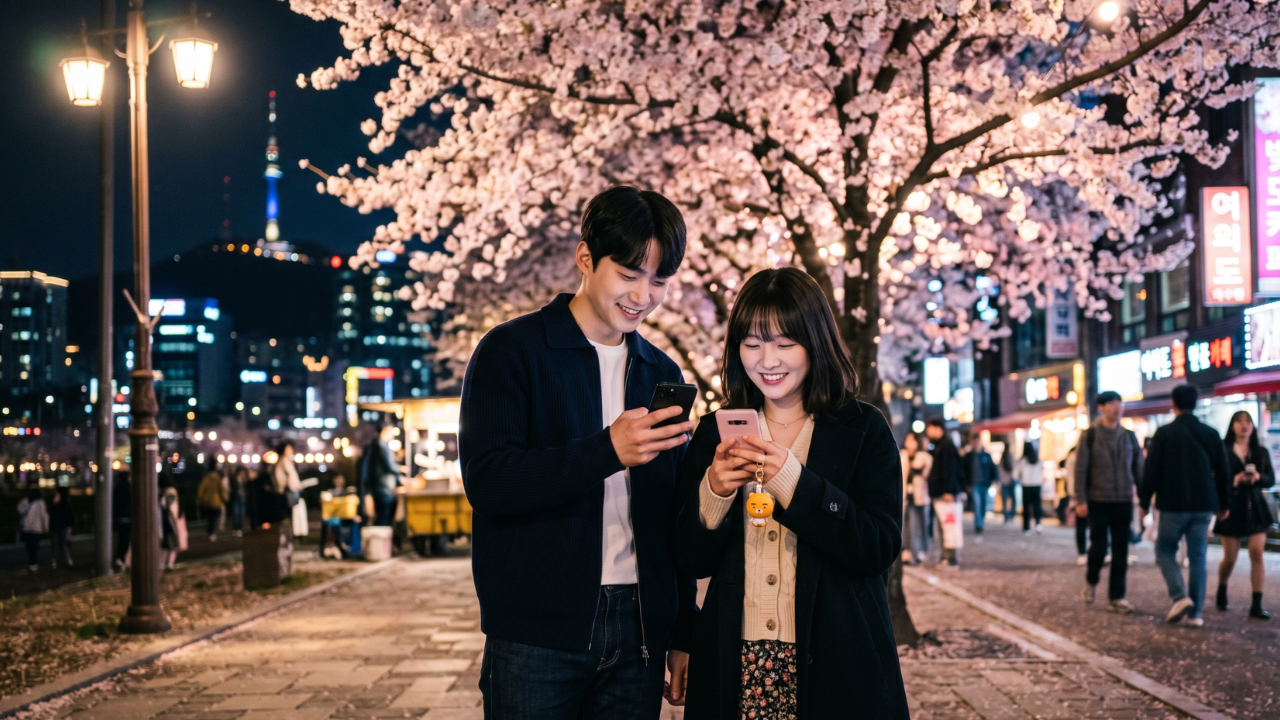
Have you ever watched a K-Drama where two characters spend 10 episodes blushing, texting all night, and going on "non-date" dates, but they aren't actually "together"? Welcome to the world of Sseom (썸). Derived from the English word "Something," Sseom is that mysterious, heart-fluttering stage before a relationship becomes official. It’s a delicate dance of emotions that every K-Drama fan and Korean learner should understand.
1. The "Mil-dang" Tug-of-War The most important part of a Sseom is Mil-dang (밀당), which stands for Milgo-Danggigo (Pushing and Pulling). In Western dating, being direct is often valued. In Korea, Sseom is about the "game." Should I reply to their text immediately? Or wait 10 minutes so I don't seem too desperate? It’s a psychological tug-of-war that builds tension and excitement.
2. Digital Closeness: The KakaoTalk Phase A Sseom happens mostly on your phone. If you are in a Sseom, you are likely texting from the moment you wake up to the moment you go to sleep. Checking for that little "1" to disappear on KakaoTalk is a daily ritual. Sharing photos of your lunch or a sunset is how Koreans say, "I'm thinking of you," without saying "I love you" yet.
3. The "Go-baek" (The Official Confession) Unlike some cultures where you "slide" into a relationship, in Korea, there is usually a clear finish line: The Go-baek (고백). A relationship doesn't officially start until one person (traditionally the man, but increasingly anyone!) says, "Will you be my girlfriend/boyfriend?" or "Let's date." Without this "Go-baek," you are still just "Sseom-ing," no matter how many movies you've watched together!
The Sseom stage is often remembered as the most exciting part of a romance. It’s full of "Nunchi" (reading the room) and sweet uncertainty. If you find yourself "Sseom-ing" with a Korean friend, enjoy the ride-and get ready for the confession!
Author